

Why Thickness Is Not the Core of PPF Performance: A Material-Based Perspective
In the paint protection film (PPF) market, thickness is often treated as the primary indicator of quality. It is common to hear claims like:
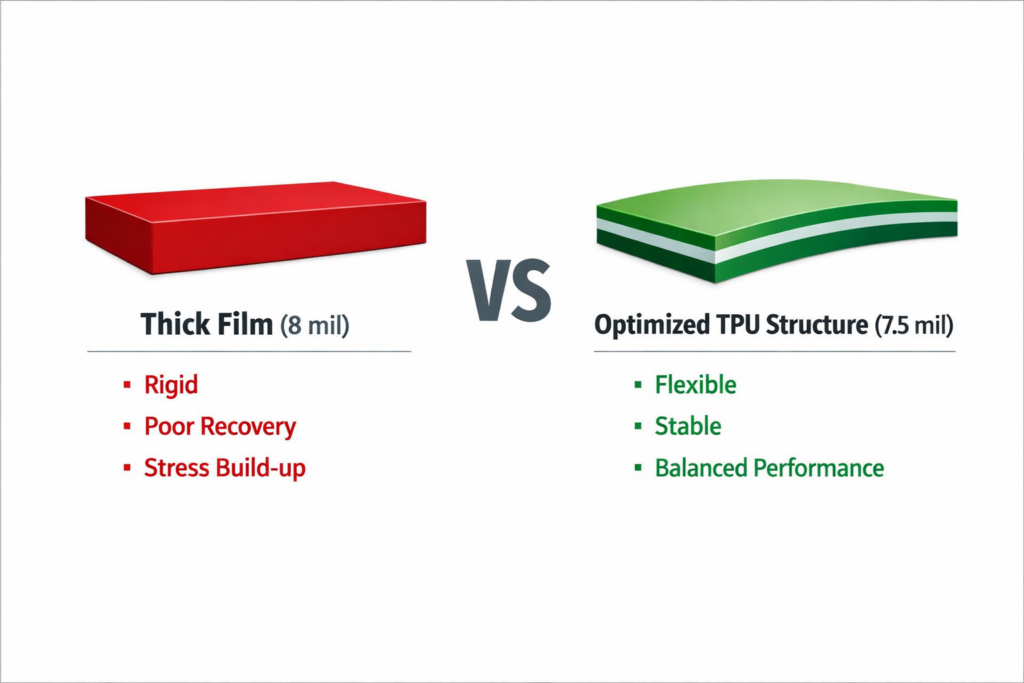
“8 mil is better than 7.5 mil.”
“Thicker film provides better protection.”
“Higher thickness means a higher-grade product.”
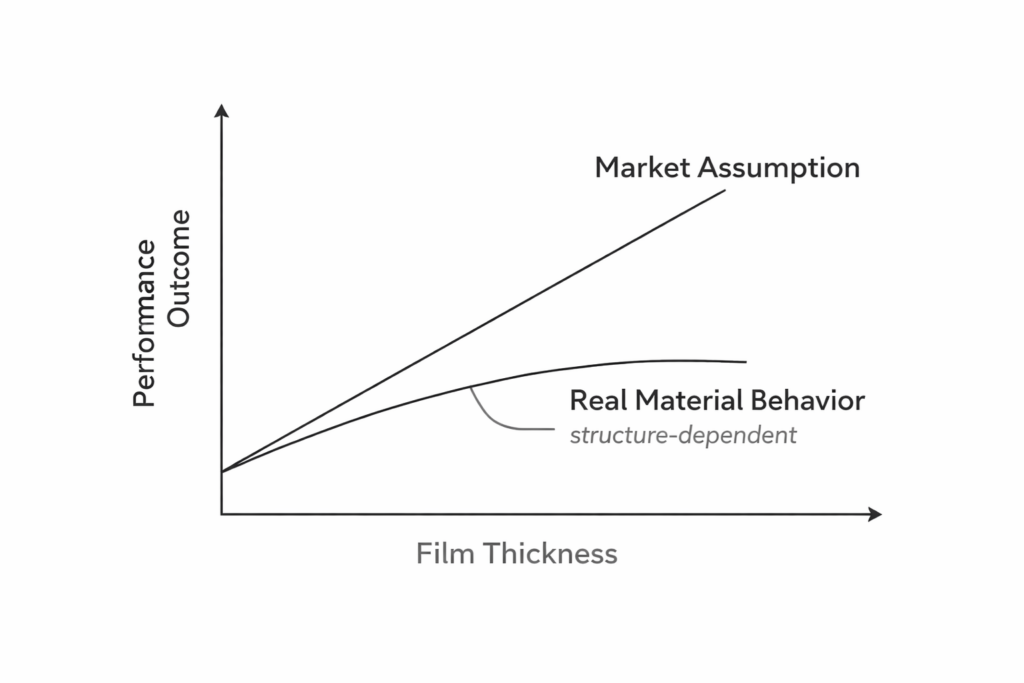
These statements persist because they are simple, intuitive, and easy to communicate. However, from a materials engineering perspective, thickness is a result variable — not the root cause of performance.
What Does Thickness Actually Represent?
Thickness alone does not determine the key performance characteristics of a PPF. Two films with an identical thickness of 8 mils (1 mil = 0.001 inch) can perform very differently in real-world conditions.
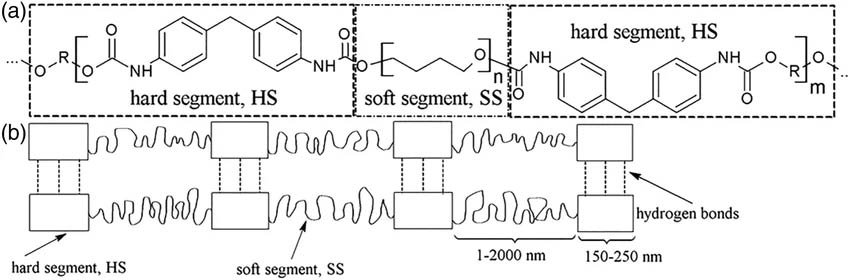
True quality is defined at a molecular level, covering:
Impact resistance and energy absorption.
UV stability and yellowing resistance.
Installation behavior (stretching, conformability, and edge wrapping).
When Thickness is Used as “Structural Compensation”
In many cases, increased thickness is used to mask material limitations rather than provide a genuine advantage. If the base material is lower quality, thickness helps mitigate these three common issues:
1. Higher Material Rigidity
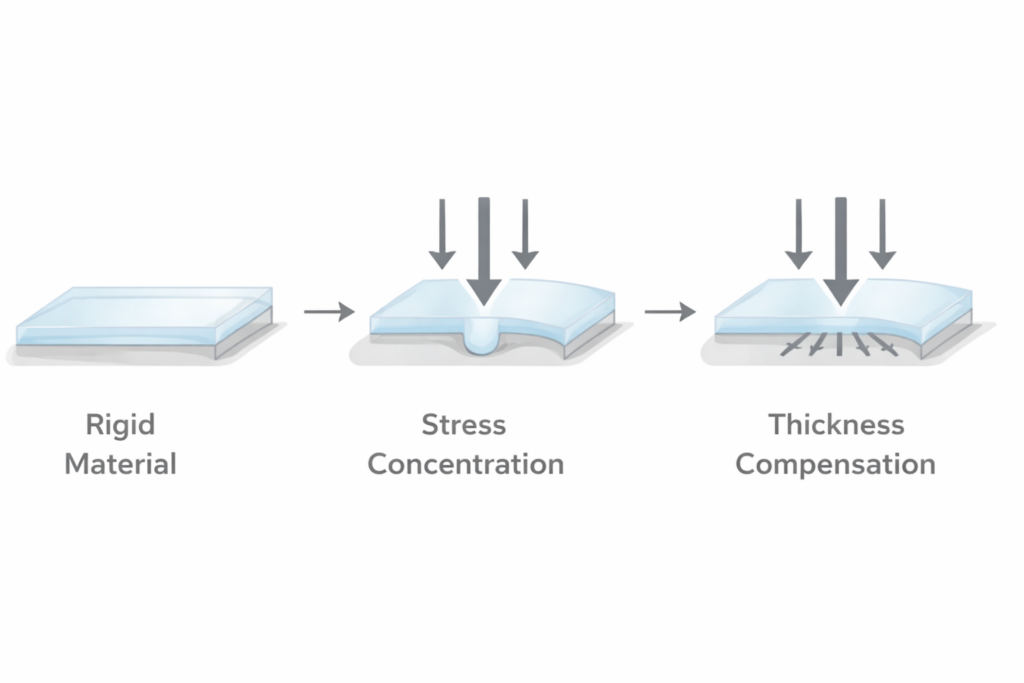
Some TPU formulations are inherently stiffer. While increasing thickness provides more “padding” during an impact, it does not change the underlying rigidity. A thick, rigid film is actually more prone to failure than a thinner, more elastic one.
2. Limited Stretch Window
Materials with a narrow elongation range have a lower tolerance for complex surfaces. Additional thickness can create an illusion of stability, but the material may still develop stress concentrations during installation.
3. Poor Stress Recovery
Certain materials do not recover well after deformation, leading to “stress marks” or tension lines. A thicker construction may delay the visibility of these effects, but it doesn’t eliminate the root cause.
What Actually Determines PPF Performance?
The performance of PPF is fundamentally governed by the structure of its base material: TPU (Thermoplastic Polyurethane).
The Role of Hard Segments (Diisocyanates)
Hard segments primarily influence UV resistance and yellowing behavior. For example, Aliphatic structures are essential for a film to remain clear over years of sunlight exposure. A thick film made with inferior “Aromatic” segments will still turn yellow, regardless of its thickness.
The Role of Soft Segments (Polyols)
Soft segments determine flexibility, hydrolysis resistance, and installation friendliness. Whether a film uses polyether-based or polycaprolactone-based chemistry defines how the film behaves when stretched around a bumper — not how many “mils” it has.
The Installation Trade-Off: When Thicker is Harder
From an installation standpoint, more thickness often introduces additional risks:
Reduced conformability on complex curves.
Difficult edge wrapping, leading to higher “rebound force.”
Increased risk of edge lifting over time.
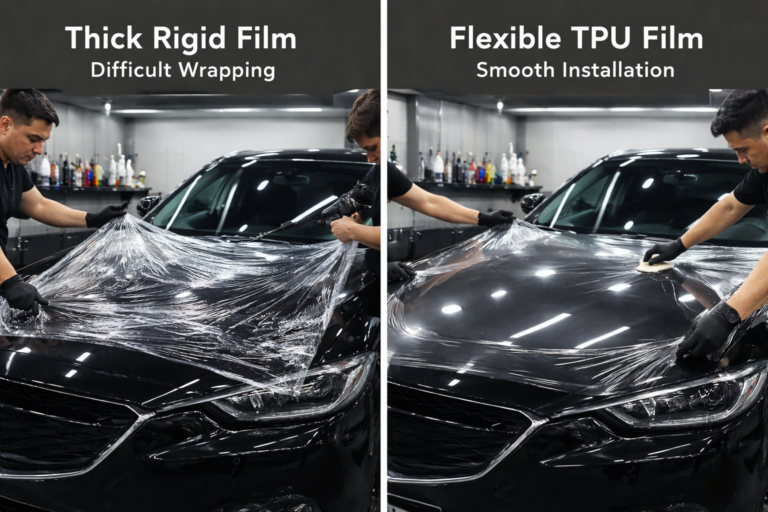
For a professional installer, a “better” film is rarely the thickest one; it is the one that remains predictable, stable, and controllable during the application process.
A More Practical Way to Evaluate PPF
Instead of simply asking, “How thick is this film?” a more meaningful evaluation for car owners and professionals should include:
What type of TPU structure is used? (Aliphatic is the gold standard).
What is the soft segment system? (Polyether-based for better humidity resistance).
How stable is the material over time? (Resistance to yellowing and staining).
How does it behave during installation? (Does it allow for clean edge tucking?).
Conclusion: Structure Over Marketing
Thickness is easy to quantify, which makes it easy to market. However, in the real world, material structure eventually reveals itself through time and exposure. Performance in areas such as yellowing resistance and durability is determined by internal composition, not external dimensions.
The Dupotop Perspective
At Dupotop, we don’t sell claims; we explain materials. We believe that an informed customer is a satisfied customer. Choosing a film based on its chemical integrity ensures long-term protection that outlasts any “thickness” hype.