


Architectural Window Film: How Solar Heat Gain, Glare and Daylight Affect Building Comfort
Glass brings natural light and open views into a building, but it can also allow unwanted solar heat to enter the interior. Strong sunlight may increase indoor heat, create glare and affect visual comfort.
Architectural window film helps manage these issues by controlling solar energy and visible light passing through glass. Understanding three factors — solar heat gain, glare and daylight — is essential when choosing the right film.
1. Solar Heat Gain: Why Buildings Get Hot
Solar heat gain occurs when energy from sunlight enters a building through its windows. This can make indoor spaces uncomfortable, particularly in Malaysia’s tropical climate, where buildings often experience strong sunlight throughout the year.
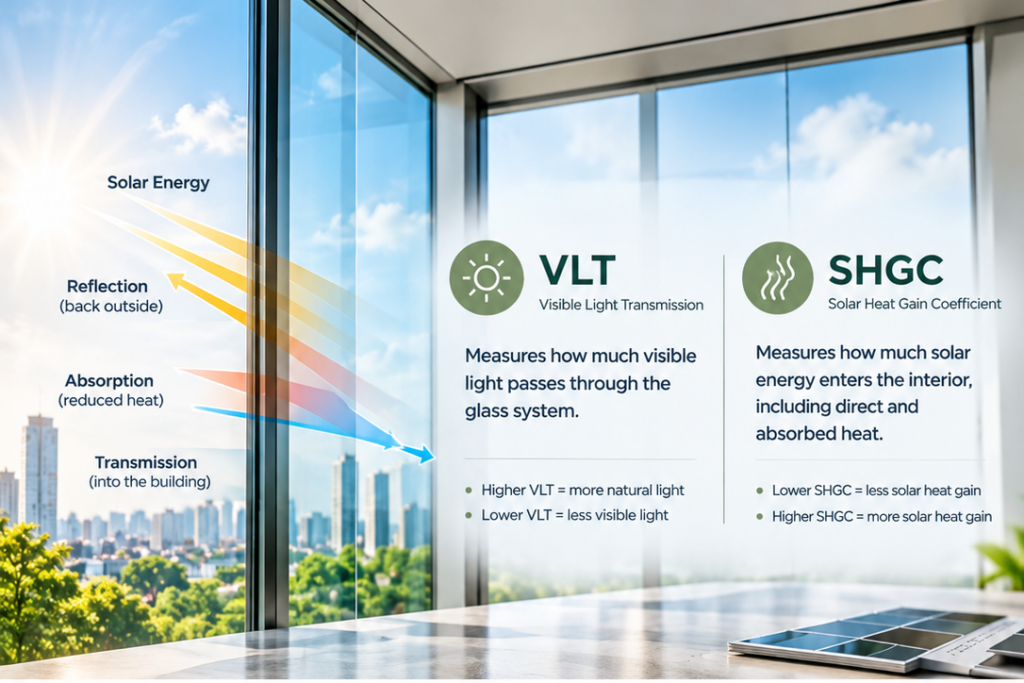
Solar control window films are designed to reflect and/or absorb portions of incoming solar radiation, depending on their construction. This can reduce solar heat entering the building.
However, darker glass does not automatically mean better heat rejection. Film performance depends on its material technology and measured solar-control properties.

2. Glare vs. Natural Daylight
Glare occurs when excessive brightness or strong light contrast causes visual discomfort. In offices, it can affect computer screen visibility; in homes and commercial spaces, it may make areas near windows uncomfortable to use.
Closing curtains can reduce glare, but it also blocks daylight and outdoor views.
Architectural window film offers another option. The right specification can help reduce excessive brightness while retaining useful natural light.
The key is balance. A film with lower visible light transmission may reduce brightness more significantly, but it can also make the interior darker. The ideal choice depends on the building’s exposure, intended use and daylight requirements.

3. Two Key Measurements: VLT and SHGC
When comparing architectural window films, two important measurements help explain their performance.
Visible Light Transmission (VLT)
VLT measures the percentage of visible light that passes through a glazing system. A higher VLT generally allows more natural light into the interior, while a lower VLT reduces visible light transmission.
Solar Heat Gain Coefficient (SHGC)
SHGC measures how much incident solar energy enters a space through a glazing system, including directly transmitted energy and the portion of absorbed energy that flows indoors. A lower SHGC generally indicates less solar heat gain.
These measurements serve different purposes. VLT describes visible light transmission, while SHGC describes solar heat gain.
A suitable film should be selected by considering both measurements alongside the existing glass and the building’s requirements. Always check whether published figures refer to the film alone or to the combined film-and-glass system.
4. How to Choose the Right Architectural Window Film
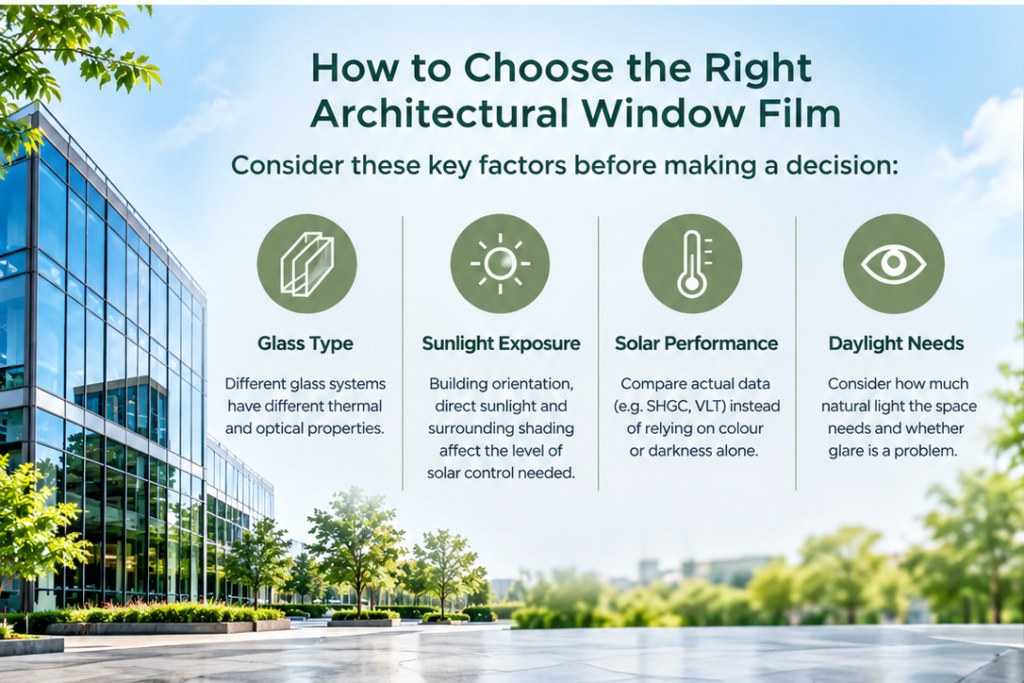
Before selecting a film for a building, consider four key factors:
-
Glass type: Different glazing systems respond differently to heat and solar radiation. Glass compatibility should be assessed before installation.
-
Sunlight exposure: Building orientation, direct sunlight and surrounding shading influence the level of solar control required.
-
Solar performance: Compare relevant performance data rather than relying on colour or darkness alone.
-
Daylight requirements: Consider how much natural light the space needs and whether glare affects occupants.
For large glass facades, offices and commercial buildings, different elevations may require different specifications. Professional assessment helps identify a suitable solution for each application.
Conclusion: Performance Matters More Than Darkness
Choosing architectural window film is not simply about making glass darker. It is about managing solar heat gain, reducing unwanted glare and maintaining suitable natural daylight.
For installers, contractors, distributors and building project teams, understanding these performance factors supports better product selection and more realistic customer expectations.
At Dupotop, we believe window film should be evaluated based on its material properties, measured performance and intended application.
The right film is not necessarily the darkest one. It is the one that best matches the building’s requirements.
Explore Dupotop’s architectural window film solutions:
https://dupotopfilms.com/window-film/
For product enquiries and wholesale supply, contact the Dupotop team to discuss your requirements.