Ceramic vs. Dyed Film: Performance, Cost & Profit Guide for Wholesale Buyers
In-depth comparison of Ceramic vs. Dyed Window Film performance, heat rejection, and wholesale cost. A crucial guide for distributors making inventory and product line decisions.
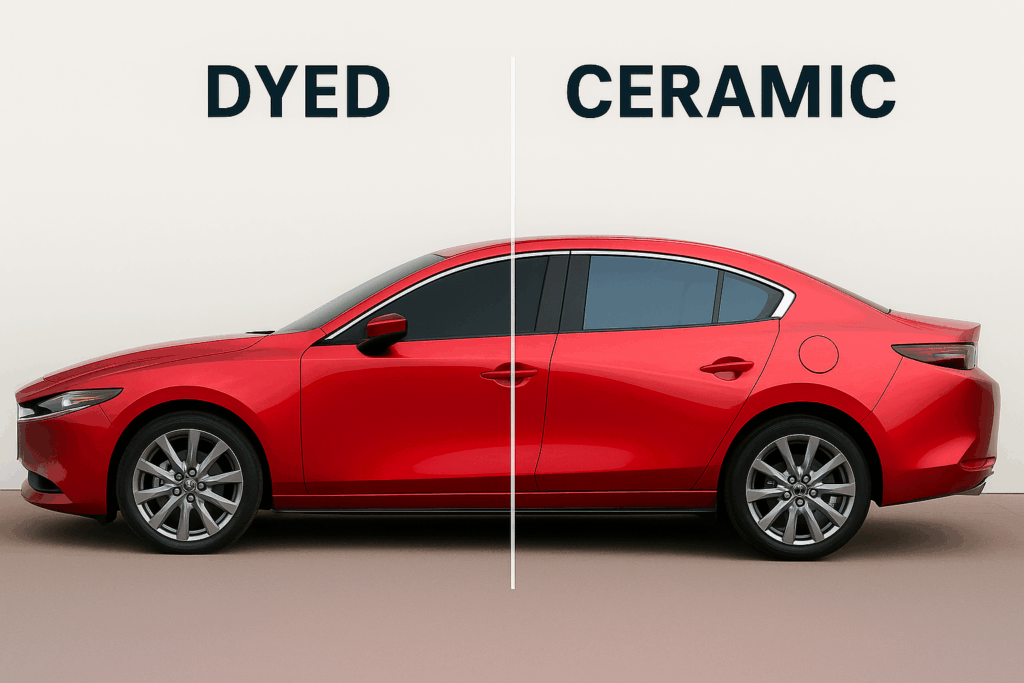
Ceramic vs. Dyed Window Film: What Wholesale Buyers Should Know
Introduction
Wholesale buyers and distributors face a key choice: ceramic window films or dyed films? Both have their place in the market, but their differences impact performance, durability, and profitability. This article explains the differences and helps you decide what to stock for your customers.
Dyed Window Film: Cost Advantages and Market Positioning
Made by layering dye into PET base
Cost-effective, darker appearance
Provides basic heat rejection and glare reduction
Downsides: less durable, prone to fading over time
Ceramic Window Film: Technical Benefits and Premium Market Value
Uses nano-ceramic technology to block infrared (IR) heat and UV rays
High durability, excellent clarity, non-metallic (does not interfere with signals)
Long-lasting color stability
Premium price, but delivers higher value to end customers
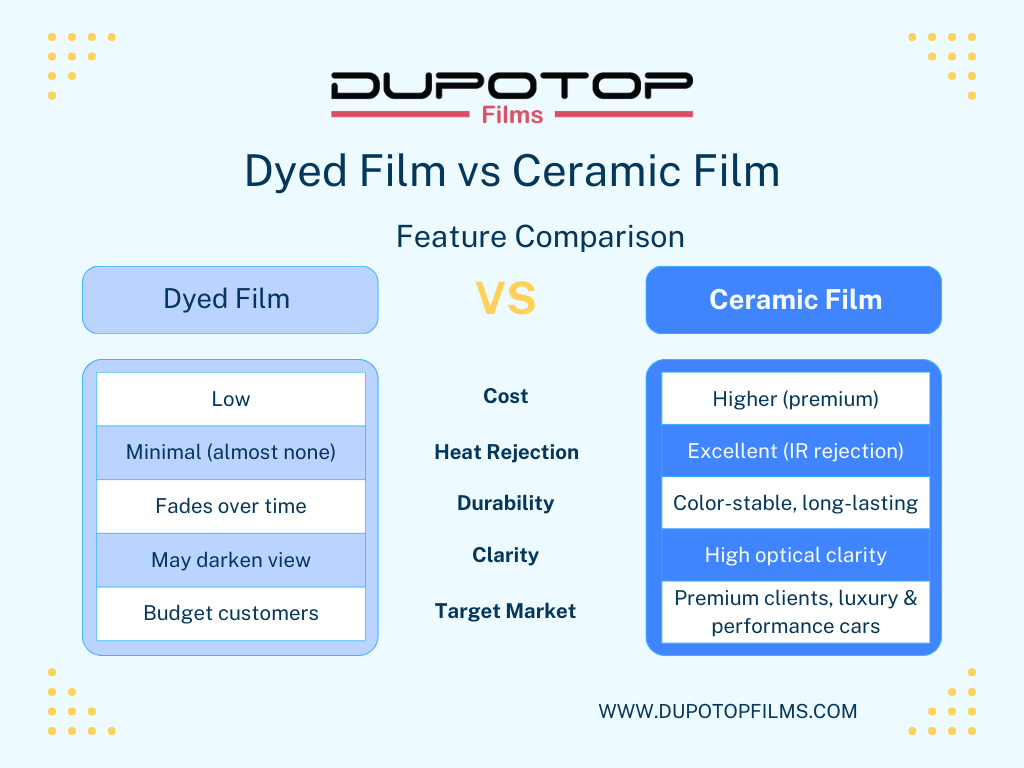
Head-to-Head Comparison: Ceramic vs. Dyed Key Performance Metrics
Business Strategy: Maximizing Profit with Ceramic and Dyed Film Inventory
Inventory Strategy: Offer dyed film for price-sensitive markets, ceramic film for premium clients
Profit Margins: Ceramic film allows higher markup, dyed film moves faster in volume
Training: Ceramic may require educating customers on benefits
Why Partner with Dupotop for Stable Ceramic and Dyed Film Supply?
Complete range: from dyed to advanced ceramic films
Stable performance, color-stable technology
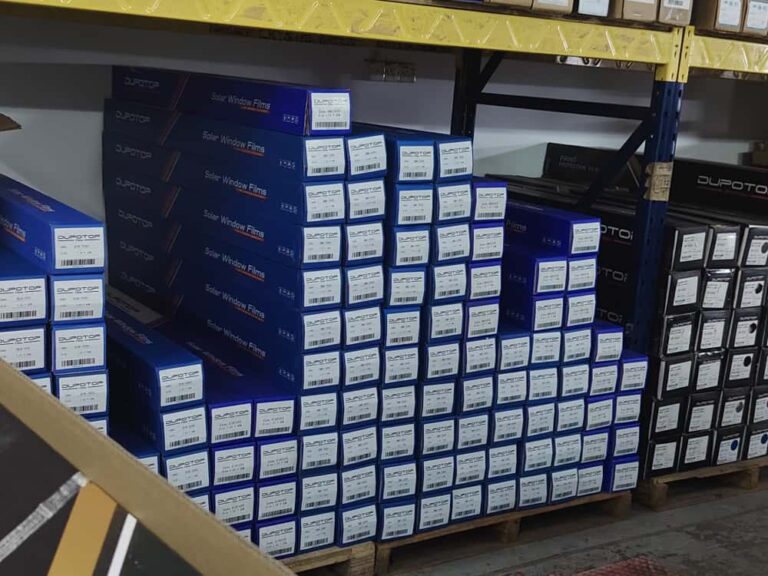
Wholesale support: training, marketing, and logistics
Competitive pricing for both entry-level and premium segments
Conclusion and Balanced Inventory Strategy
Both ceramic and dyed films have their place. Dyed films serve as cost-effective entry options, while ceramic films deliver premium protection and profitability. Wholesale buyers should stock a balanced mix to cover both segments.
👉 Visit Dupotop Films to explore our full product range and request wholesale sample kits.