

Introduction
When it comes to Paint Protection Film (PPF), thickness isn’t just a number — it directly affects durability, flexibility, and installation quality. For car owners and professional installers alike, understanding how film thickness impacts protection can help you choose the best fit for your needs.
Understanding PPF Thickness (6.5mil / 7.5mil / 8.5mil / 9.5mil)
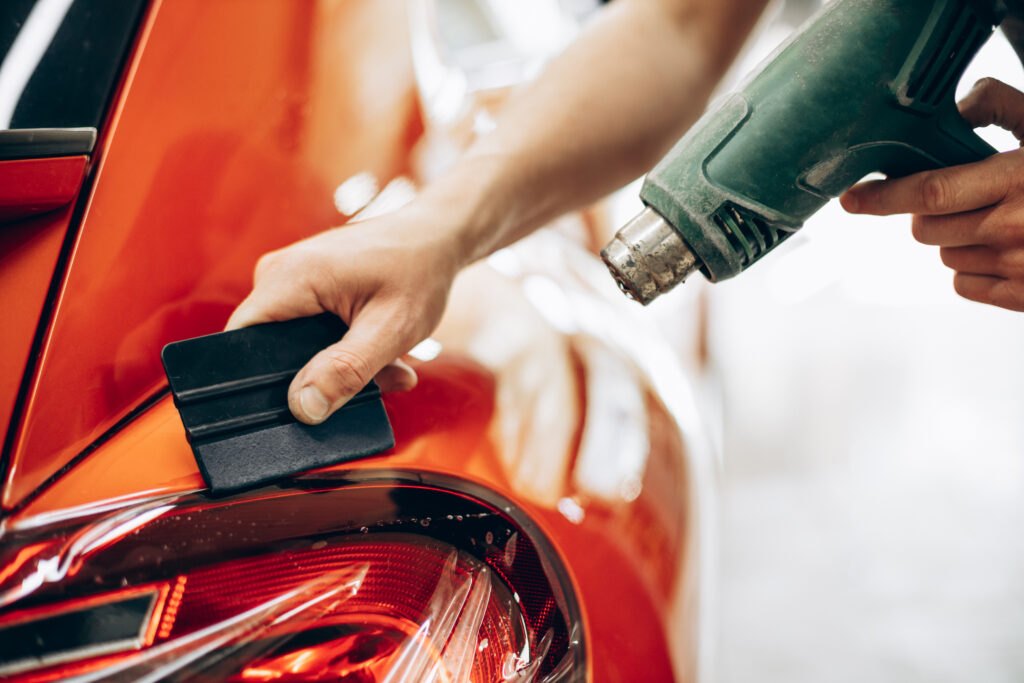
PPF thickness is measured in mils (1 mil = 0.001 inch). Thicker films usually offer greater protection from rock chips and debris but are less flexible during installation. The right choice depends on the level of protection you want and how often the vehicle is exposed to harsh conditions.
6.5mil – Balanced Protection for Everyday Use
Perfect for drivers who need reliable, invisible protection. Easier to stretch and install, with great optical clarity. Ideal for standard passenger cars that see mostly daily commuting.
7.5mil – Enhanced Durability for City Drivers
Ideal for urban vehicles facing frequent dust, small debris, and light scratches. Slightly thicker for better scratch resistance while maintaining flexibility for curved surfaces.
8.5mil – Premium Protection for Luxury Cars
Preferred by detailers and premium car owners. Excellent resistance to stone chips, swirl marks, and minor abrasions. Delivers a high-gloss finish with outstanding clarity and durability.
9.5mil – Maximum Armor for Harsh Conditions
Engineered for off-road vehicles or demanding environments. Offers unmatched impact protection and surface hardness, though installation requires advanced technique and precise temperature control.
PPF Thickness and Installation Efficiency: What Installers Must Know
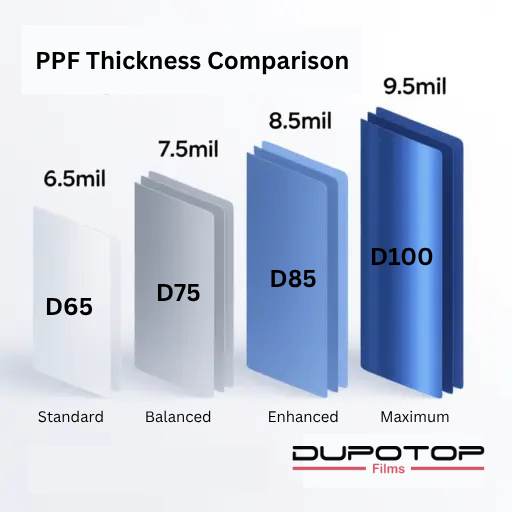
Thicker films provide stronger physical defense but require more skill to handle. Proper temperature, stretching angles, and squeegee pressure are crucial to avoid stretch marks or lifting edges. Using a neutral pH slip solution and quality adhesive further improves installation results and long-term performance.
Recommended Dupotop PPF Series by Thickness
For every thickness preference, Dupotop provides dedicated options:
D65 (6.5mil)– Flexible & easy to install
D75 (7.5mil) – Balanced durability
D85 (8.5mil) – Premium protection
D100 (9.5mil)– Heavy-duty defense
Each series is made with premium aliphatic TPU and a self-healing topcoat, delivering clarity, toughness, and long-term stability that meets global standards.
Conclusion & Call to Action
Choosing the right PPF thickness is about finding the perfect balance between flexibility and protection. Whether you’re a car enthusiast or a professional installer, Dupotop offers dependable film solutions engineered for your needs.
👉 Explore all Dupotop PPF series: https://dupotopfilms.com/paint-protection-film/

FAQ (For Installers & Car Owners)
Q1: Does thicker PPF always mean better protection?
Not necessarily — it depends on usage. Daily drivers may prefer 6.5mil–7.5mil for easier handling, while luxury or off-road cars benefit from 8.5mil–9.5mil for maximum durability.
Q2: Will thicker film affect gloss or transparency?
High-quality TPU like Dupotop’s maintains excellent clarity and gloss even at 9.5mil thickness.
Q3: Is thicker film harder to install?
Yes, thicker films require more skill and temperature control, so professional installation is recommended for the best finish.