

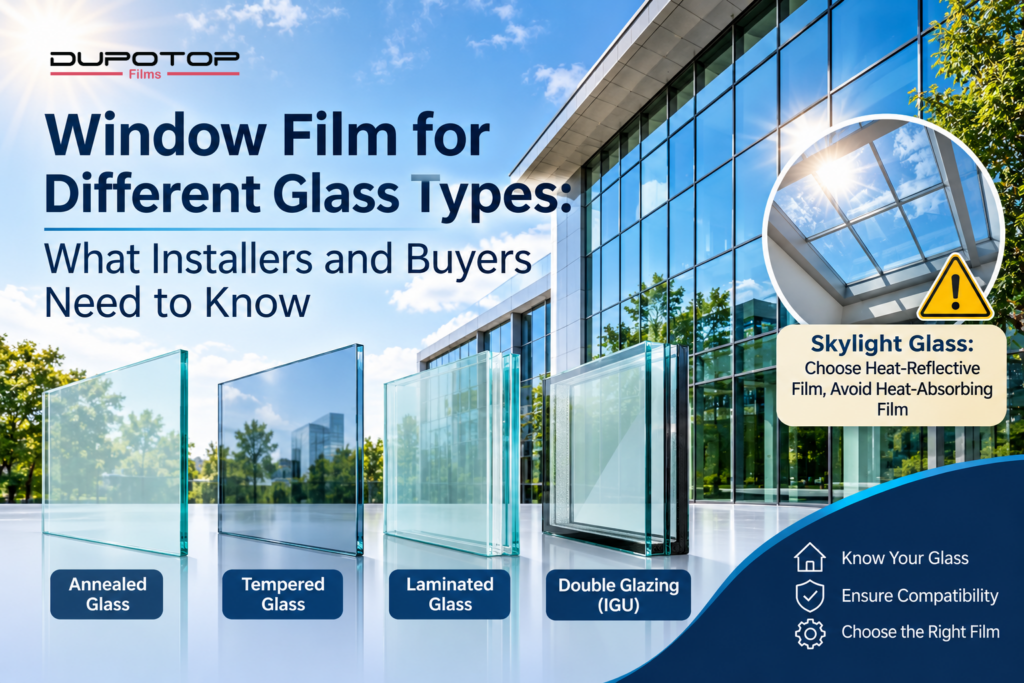
Window Film for Different Glass Types: What Installers and Buyers Need to Know
When choosing architectural window film, many people focus on performance figures such as IR Rejection, UV Rejection and Total Solar Energy Rejected (TSER).
However, one important question is often overlooked:
What type of glass will the film be installed on?
Buildings use different types of glass, each with its own thickness, structure, colour, coating and thermal characteristics. These differences can directly affect window film selection and overall performance.
Even when the same window film is used, the results may vary depending on the glass underneath.
For installers and buyers, understanding the glass type is an essential step before selecting the right window film.
1. Different Types of Glass Used in Buildings
Not all building glass is the same. Different manufacturing processes and structures give each glass type its own characteristics.
1. Annealed Glass
Annealed glass is a common type of ordinary glass that undergoes a controlled cooling process to reduce internal stress during manufacturing.
It is commonly found in certain residential, office and commercial applications.
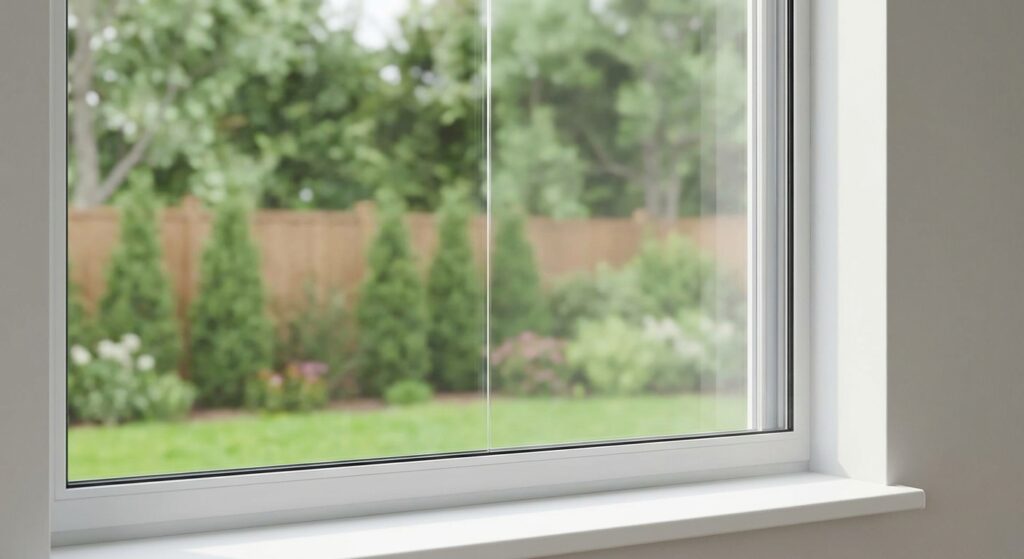
Compared with tempered glass, annealed glass has different strength and thermal characteristics. Its thickness, size and solar exposure should be considered before selecting a window film.
2. Tempered Glass
Tempered glass is heat-treated to improve its mechanical strength and resistance to thermal stress compared with ordinary annealed glass.
It is commonly used for building façades, glass doors, shower screens and large glass panels.
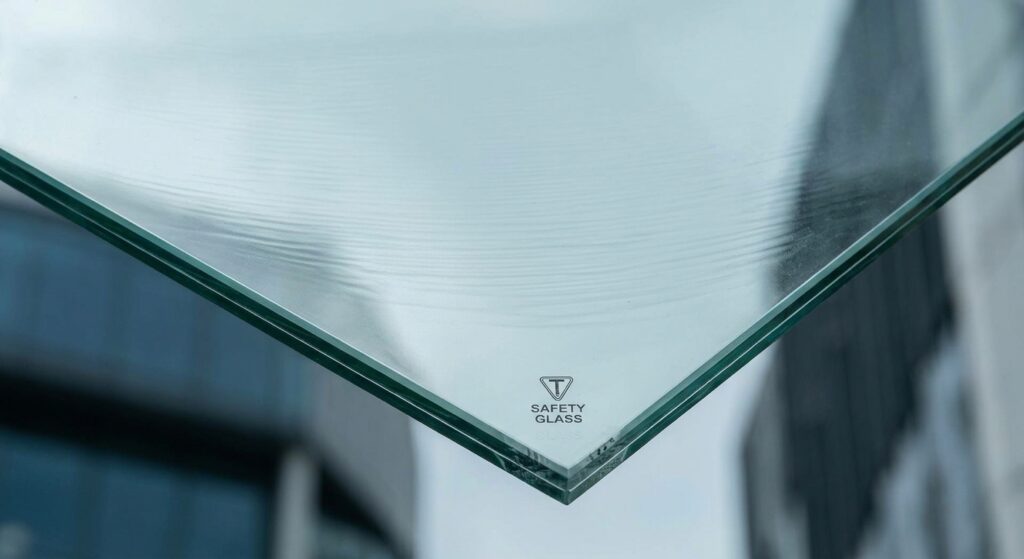
However, tempered glass does not automatically make every type of window film suitable. Glass dimensions, thickness, colour, installation conditions and the film’s solar performance still need to be evaluated.
3. Laminated Glass
Laminated glass consists of two or more glass sheets bonded together with an interlayer.
When the glass breaks, the fragments generally remain attached to the interlayer, helping reduce the risk of falling glass fragments.
It is commonly used in building façades, skylights and applications where additional safety performance is required.
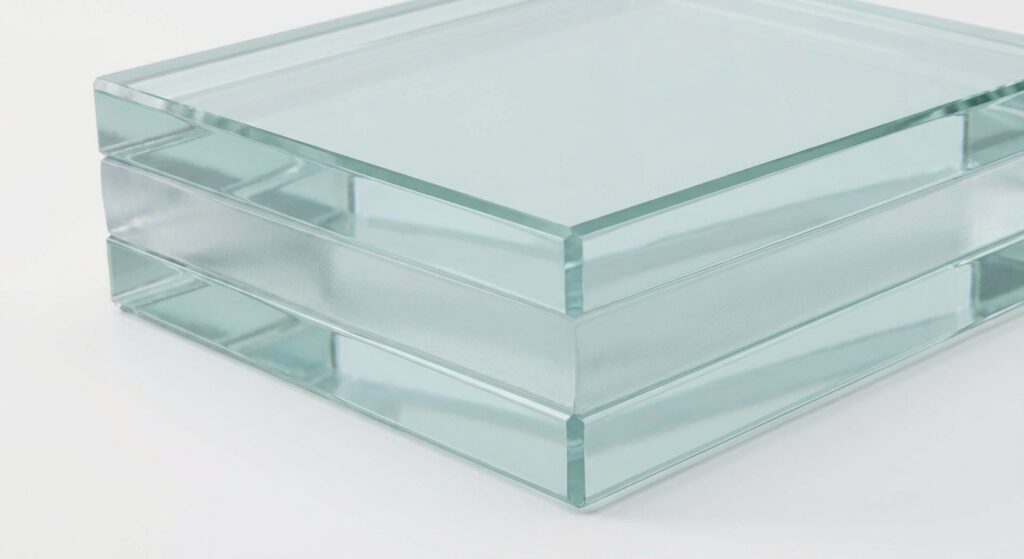
When selecting window film, the existing glass construction and compatibility with the film must be considered.
4. Double Glazing / Insulated Glass Unit (IGU)
Double glazing typically consists of two glass panes separated by a sealed space containing air or an insulating gas.
This construction is commonly used in modern commercial buildings, offices and energy-efficient building façades.
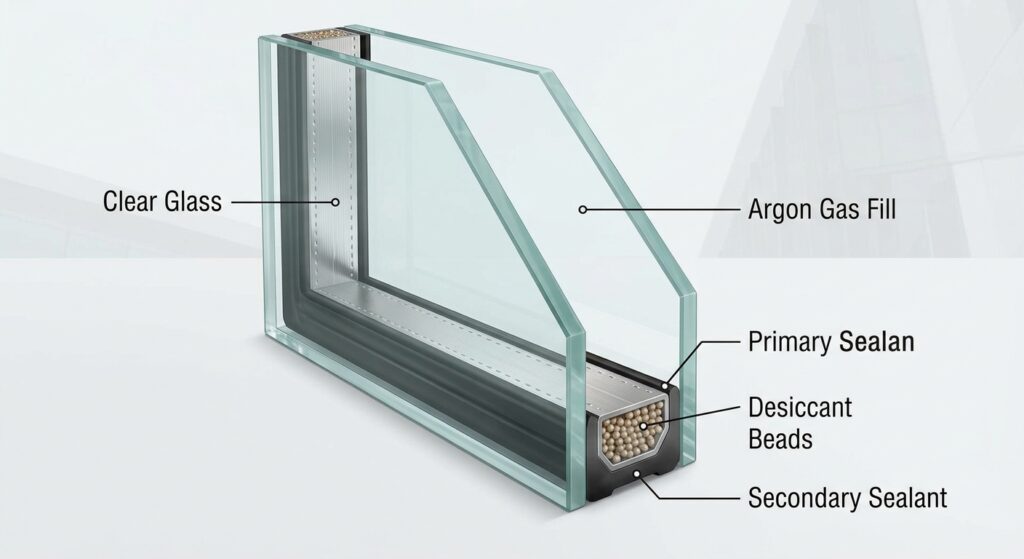
Because IGUs already have specific thermal characteristics, additional window film must be selected carefully. The glass combination, coating position and overall compatibility should be evaluated before installation.
2. How Glass Characteristics Affect Window Film Selection
Knowing the glass type is only the starting point. Several other characteristics can influence which window film is suitable.
Glass Thickness
Glass thickness can influence heat transfer and the way thermal stress develops.
Installers should confirm the actual glass thickness rather than estimating it based on appearance.
Glass Colour and Tint
Some architectural glass comes in different colours, such as green, blue, grey or bronze.
These colours can affect how the glass absorbs and transmits solar energy. Adding a coloured or highly absorptive window film may further change the overall appearance and thermal performance.
Reflective or Low-E Coating
Some architectural glass already has reflective metallic coatings or Low-E coatings applied during manufacturing.
These coatings influence how solar energy is reflected, absorbed and transmitted through the glass.
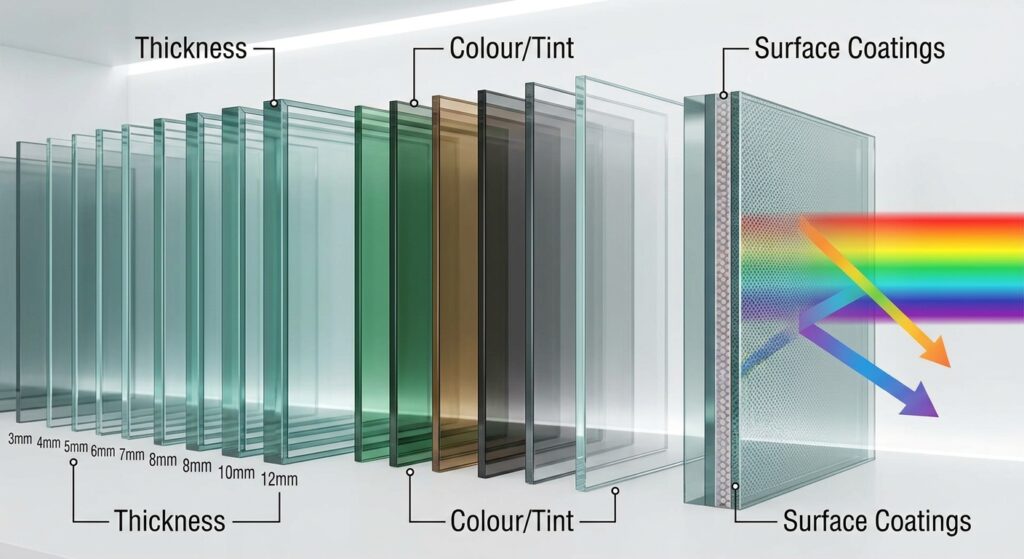
Installing an additional window film without identifying the existing coating may result in unsuitable performance or compatibility issues.
3. Single Glazing vs Double Glazing (IGU)
Single glazing and double glazing have different structures, so window film selection should not follow exactly the same approach.
Single Glazing
Single glazing consists of one glass pane.
When sunlight reaches the glass, part of the solar energy is reflected, absorbed or transmitted through it.
Adding window film changes the overall solar performance, depending on both the existing glass characteristics and the film’s specifications.
Double Glazing
Double glazing consists of two glass panes separated by a sealed air or gas space.
This construction provides different thermal characteristics compared with single glazing.
Before installing window film, it is important to identify whether the film is intended for the interior or exterior surface and to consider the glass combination and any existing coatings.
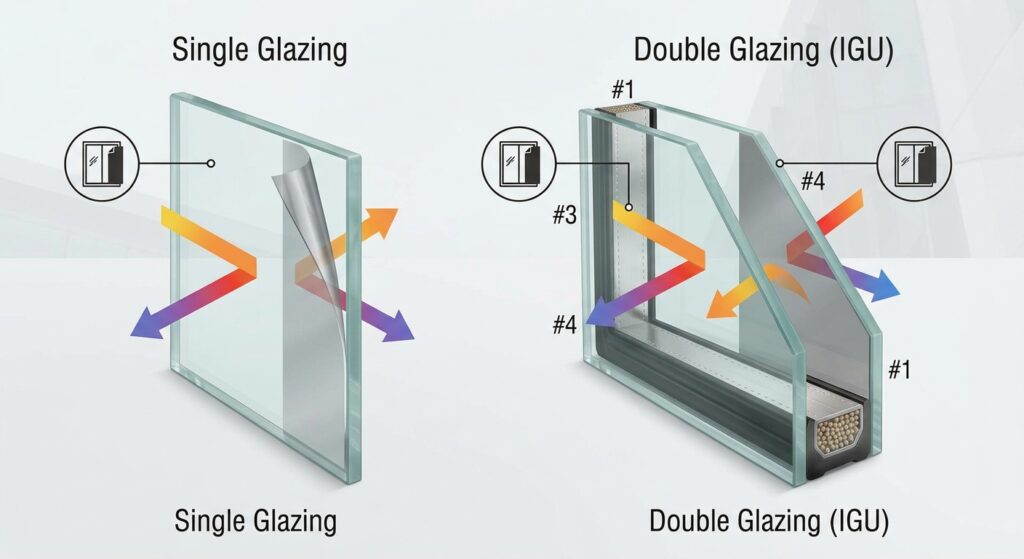
The key point: Double glazing does not automatically require a film with higher performance figures. What matters is whether the film is compatible with the complete glass unit.
4. Glass Compatibility and Thermal Stress
This is one of the most important considerations in architectural window film installation.
Once window film is applied, it changes the way solar energy is reflected, absorbed and transmitted through the glass.
Different films have different solar reflectance and solar absorptance characteristics.
If an unsuitable film is selected, it may cause the glass to absorb more solar energy and create greater temperature differences across the glass surface.
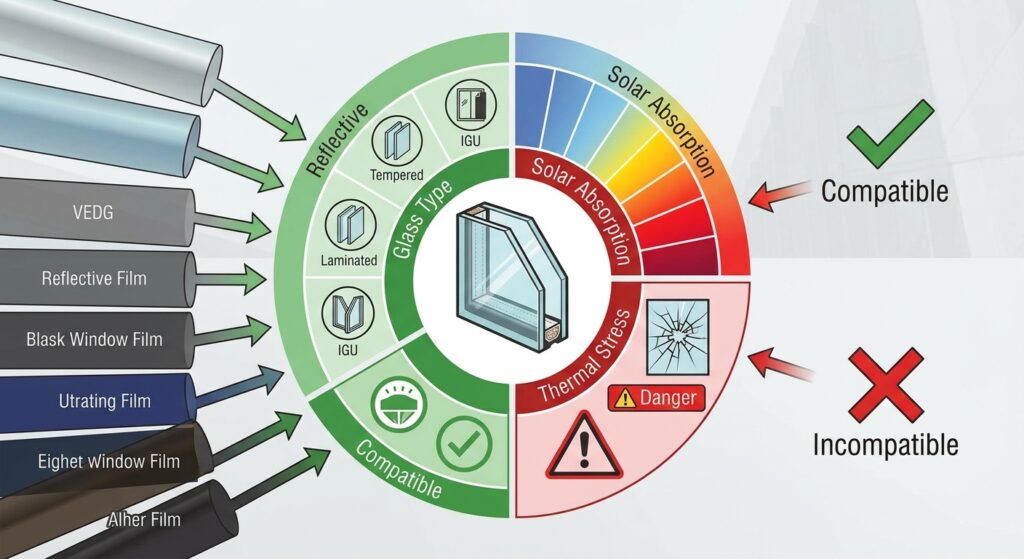
When the resulting thermal stress exceeds the glass’s ability to withstand it, the risk of glass breakage may increase.
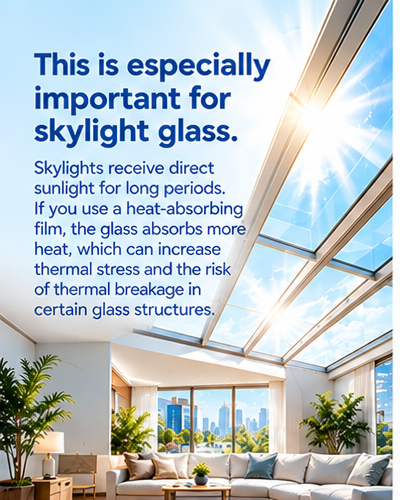
One application that requires particular attention is skylight glass.
Skylight Applications
Skylights are often directly exposed to sunlight for extended periods, making film selection especially important.
For skylight applications, heat-reflective window films should generally be considered rather than choosing ordinary heat-absorbing films without proper evaluation.
Heat-absorbing films can increase the amount of solar energy retained by the glass, potentially raising its temperature and thermal stress. Under unsuitable conditions, this may increase the risk of glass breakage.
However, reflective film should not be considered automatically suitable based on its product description alone. Glass type, thickness, construction, existing coatings and manufacturer compatibility guidelines must still be checked.
Choosing window film is not only about thermal performance. It is also about ensuring that the glass can safely accommodate the selected film.
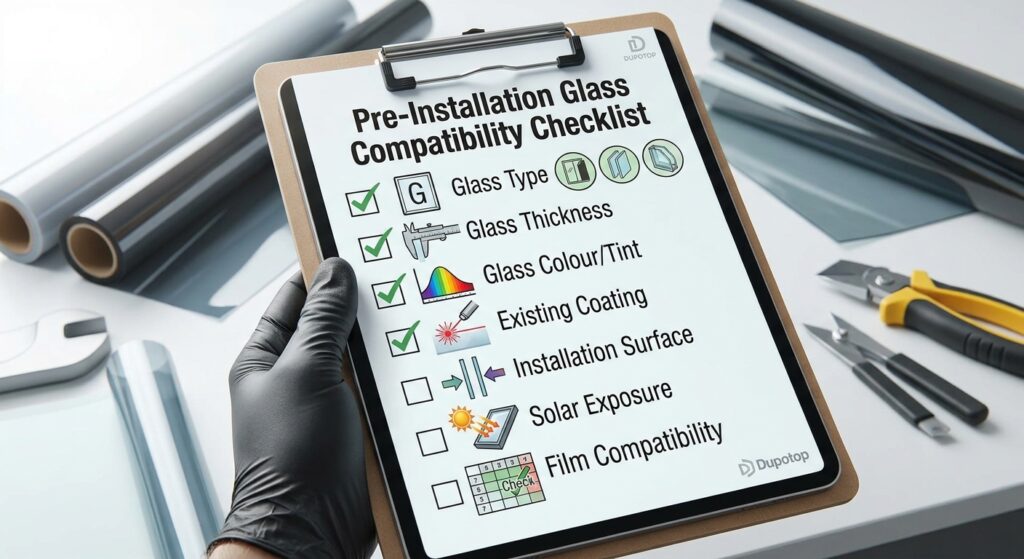
5. What Installers and Buyers Should Check Before Choosing Window Film
Before confirming a window film for any building project, installers and buyers should collect the following information:
-
Glass Type – Identify whether the glass is annealed, tempered, laminated or double glazed.
-
Glass Thickness – Confirm the actual glass thickness.
-
Glass Colour – Check whether the glass has a natural or tinted colour.
-
Existing Coating – Identify any reflective or Low-E coating.
-
Installation Surface – Confirm whether the film will be installed on the interior or exterior surface.
-
Solar Exposure – Understand the direction and duration of direct sunlight on the glass.
-
Film Compatibility – Check whether the selected film is suitable for the specific glass combination and review the relevant technical documentation.
For large building projects, skylights and double-glazed units, installers should obtain compatibility advice from the glass and window film suppliers before proceeding. Professional assessment may also be necessary.
These checks may seem simple, but they can help reduce material selection mistakes and give buyers a clearer understanding of whether a particular film is suitable for their project.
Conclusion: Understand the Glass Before Choosing the Film
Window film performance is important, but it does not work independently of the glass.
The final result depends on the film, glass construction, installation conditions and compatibility of the complete system.
For installers and buyers, choosing a window film based only on IR Rejection, UV Rejection or TSER figures is not enough.
Understand the glass first. Then choose the right window film.
At Dupotop, we believe in understanding the material, not just the marketing claims.