


Reflective vs. Heat-Absorbing Window Film: What’s the Difference?
When choosing architectural window film, many buyers focus on figures such as IR Rejection, UV Rejection and Total Solar Energy Rejected (TSER).
But have you ever considered how the film actually controls solar heat?
Two common approaches are reflective technology and heat-absorbing technology. Both help reduce solar heat entering a building, but they work differently and use different materials.
Understanding these differences helps installers and buyers choose the right film for each application.
1. Reflective Window Film: Using Metal Layers to Reflect Heat
Reflective window film is designed to reflect a portion of incoming solar energy away from the glass.
Many high-performance reflective films use Magnetron Sputtering technology, which deposits extremely thin metallic layers onto the film.
Common materials include:
Silver
Nickel
Titanium
Aluminium
Silver is known for its strong optical reflectivity and is used in certain premium sputtered film constructions. However, not all reflective films contain silver. Performance depends on the metal selection, coating structure and manufacturing process.
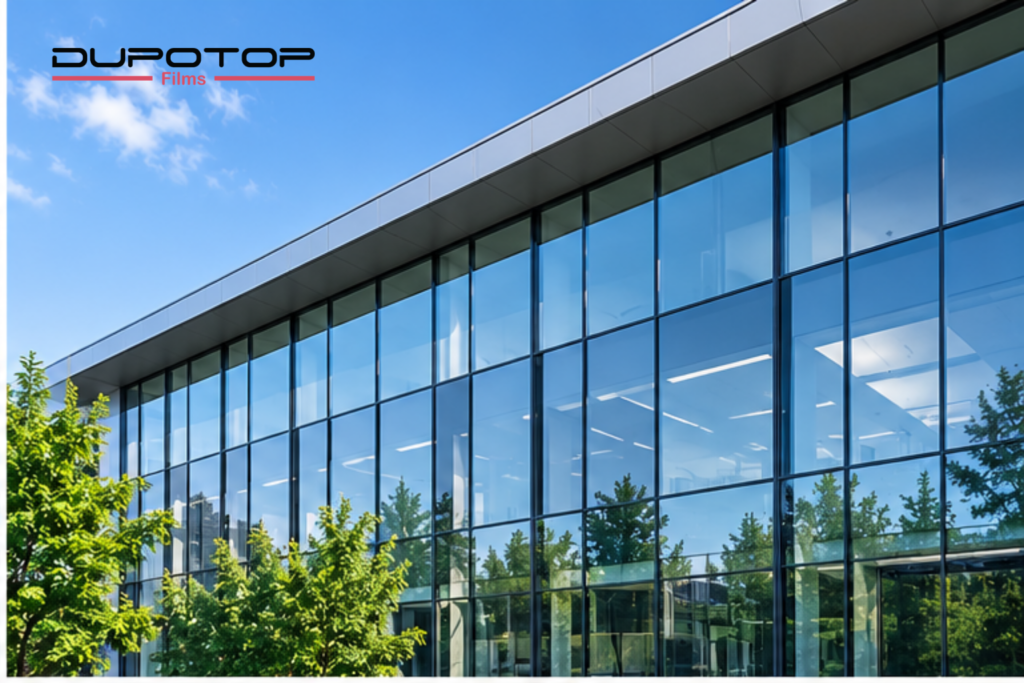
The main principle is solar reflection: redirecting part of the incoming solar energy away from the building before it enters the indoor space.
These films are commonly used in commercial buildings, offices and glass façades where effective solar control is required. Depending on the design, they may also create a metallic or mirror-like appearance.
2. Heat-Absorbing Window Film: Using Functional Materials to Manage Heat
Heat-absorbing window film works differently. Instead of relying mainly on reflection, it absorbs selected portions of incoming solar radiation.
Nano ceramic technology is one common approach. Functional ceramic materials are incorporated into the film to absorb or selectively manage certain wavelengths of solar energy.

The main principle is solar absorption: the film absorbs part of the incoming solar energy, which is then dissipated as heat through the glazing system.
Many heat-absorbing films offer a more natural glass appearance with less mirror-like reflection. They are often considered for homes, offices and commercial spaces where a strong reflective appearance is not preferred.
However, the level of heat absorption must be considered when selecting film for different glass types.
3. Reflective vs. Heat-Absorbing Film: Key Differences
| Comparison | Reflective Film | Heat-Absorbing Film |
|---|---|---|
| Common materials | Silver, nickel, titanium, aluminium | Nano ceramic and other functional materials |
| Common technology | Magnetron Sputtering | Nano Ceramic |
| Main principle | Solar reflection | Solar absorption |
| Heat control | Reflects part of solar energy away | Absorbs selected solar energy and dissipates it as heat |
| Appearance | Often metallic or reflective | Usually more natural, with less mirror-like reflection |
| Common applications | Commercial buildings and glass curtain walls | Residential, office and commercial spaces |
Both technologies can involve reflection, absorption and transmission. The difference is their predominant method of controlling solar energy.
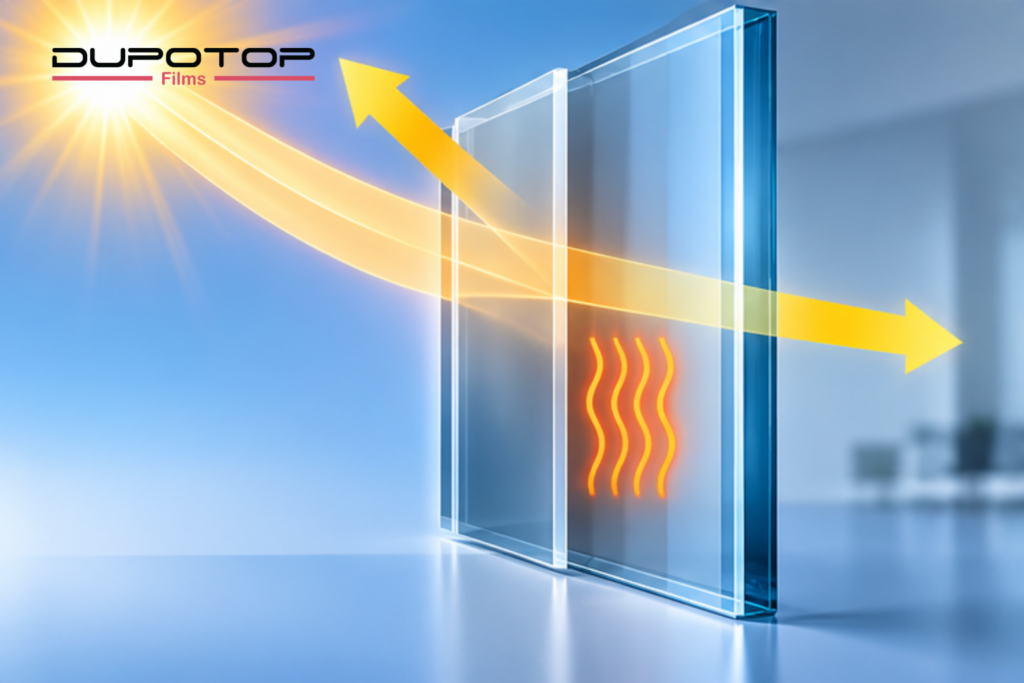
Neither type is automatically better. The right choice depends on the glass, building conditions and required performance.
4. What Should You Consider Before Choosing?
Before selecting architectural window film, installers and buyers should consider four important factors:
Glass Compatibility
Different glass types, including tempered glass, laminated glass and insulated glass units (IGUs), respond differently to solar energy. Film selection must consider glass thickness, structure, colour and existing coatings.
Building Exposure
Window direction, direct sunlight, shading and glass surface area all influence solar heat gain. A building with large sun-exposed façades may require a different solution from a partially shaded residential property.
Appearance
Reflective films may create a metallic exterior appearance, while heat-absorbing films often provide a more natural glass look. The choice should balance appearance with solar performance.
Overall Solar Performance
Do not compare films using IR Rejection alone. TSER, solar reflectance, solar absorptance and solar transmittance provide a broader picture of how a film manages solar energy.
For skylights, particular care is required. Heat-absorbing films may increase thermal stress on the glass. A suitable heat-reflective film may be considered, but compatibility must still be checked against the glass specifications and manufacturer’s recommendations.
Conclusion: Understand the Technology Before Choosing
Reflective films primarily redirect solar energy away from the glazing, while heat-absorbing films absorb selected solar energy and dissipate it as heat.
Both technologies have their own applications. The best choice is not determined by one performance figure or product label, but by the glass type, building conditions and overall solar-control requirements.

At Dupotop, we believe in understanding the material, not just the marketing claims.